
Recently created hotel / villa websites
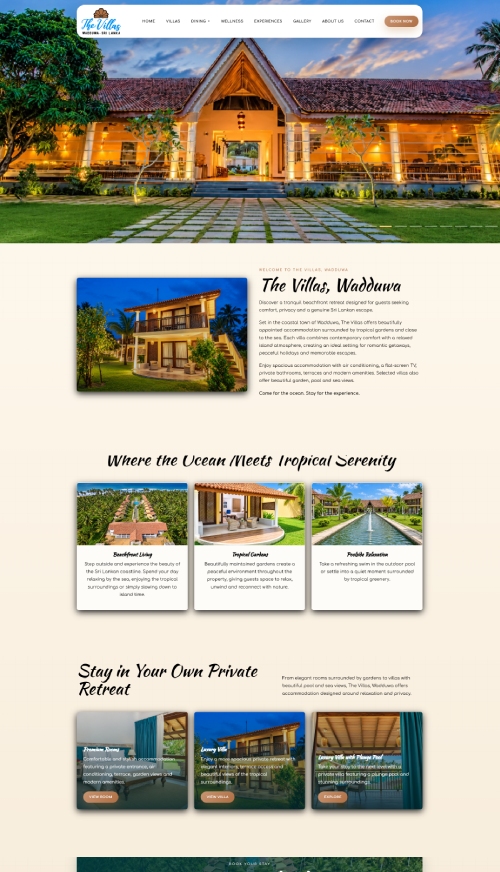
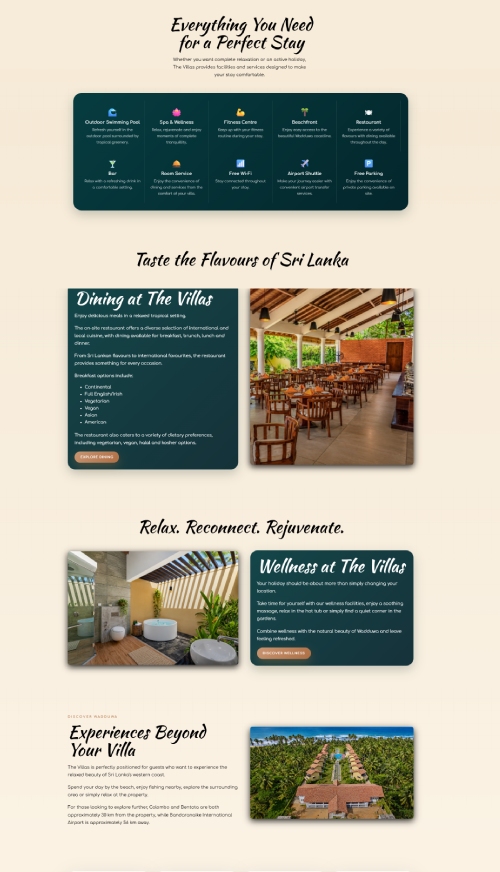
The Villas Wadduwa
Elegant hotel website showcasing luxury accommodation, tropical surroundings, dining, and relaxing holiday experiences in Sri Lanka.
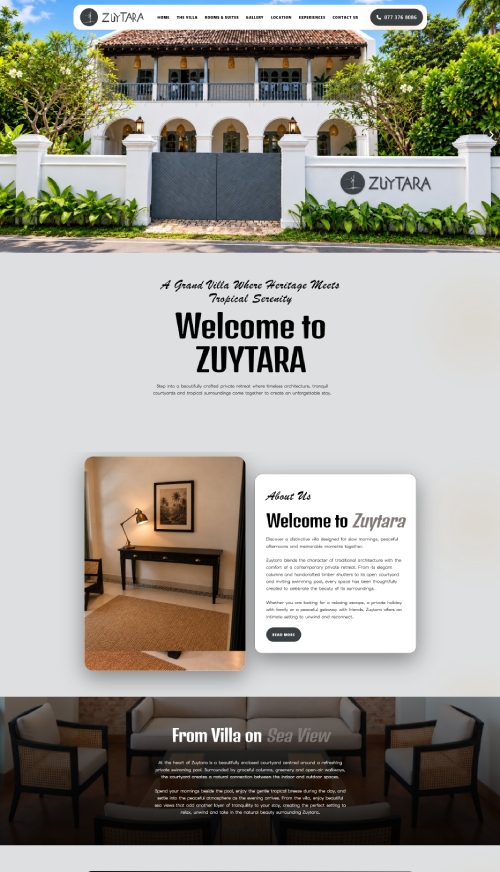
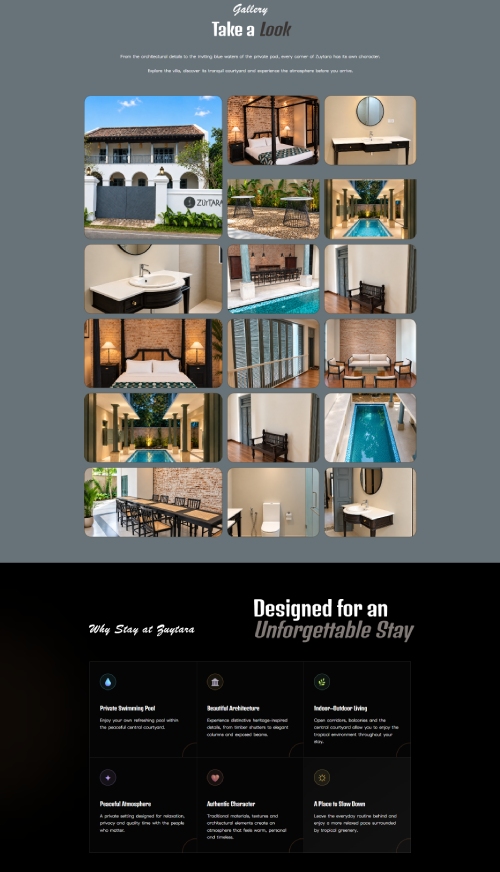
Zuytara
Elegant villa website showcasing a private tropical retreat, heritage-inspired architecture, sea views, and a private swimming pool in Talpe, Sri Lanka.
Bayagima Villa
Elegant villa website showcasing a restored colonial mansion, stylish rooms, tropical gardens, pool, and a peaceful stay near Ahangama beach.
Hotel Website Creation for Hotels, Villas and Restaurants
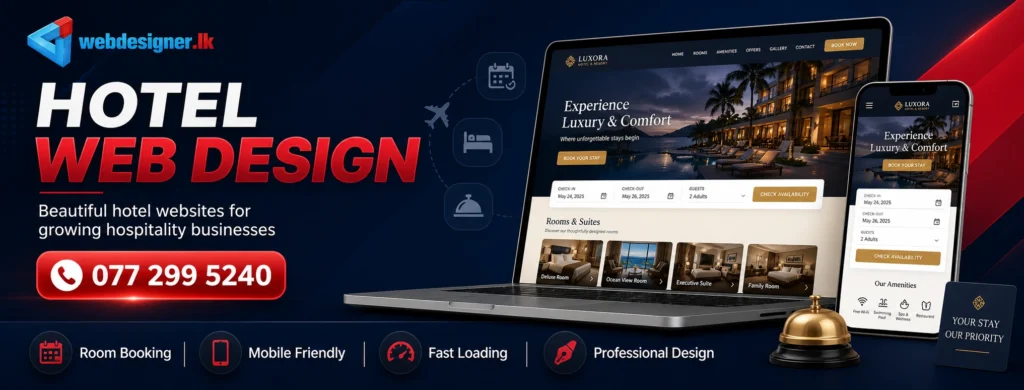
Hotel website development
A hotel website should make visitors feel confident before they make a booking enquiry. Guests usually check rooms, photos, facilities, location, food options, contact details, and reviews before choosing where to stay. If the website looks outdated or does not show enough useful information, visitors may move to another hotel, villa, or booking platform.
At WebDesigner.lk, hotel website creation is planned around presentation, trust, and enquiries. A good hospitality website should not only look attractive. It should help guests understand the property, explore rooms, view images, check facilities, and contact the business easily from mobile or desktop devices.
For hotels and villas that need a complete online presence, our web design services can support the full website planning and design process, while this page focuses specifically on hospitality websites.
Creating a Strong First Impression
The first few seconds on a hotel website matter. A visitor wants to quickly understand the atmosphere of the property, the type of accommodation offered, and whether it matches their travel plan. Strong visuals, clear headings, simple navigation, and well-presented room sections can help create that first impression.
A hotel website should not feel crowded. It should guide the visitor naturally from the homepage to rooms, facilities, gallery, location, and booking enquiry. The design should reflect the property style, whether it is a luxury hotel, boutique villa, guest house, beach resort, city hotel, restaurant, or holiday bungalow.
Good design helps the visitor imagine the experience before they arrive.
Booking Enquiry Flow
Not every hotel needs a full online booking engine at the beginning. Some properties prefer enquiry forms, WhatsApp buttons, phone calls, or email requests. Others may need availability calendars, payment integration, or third-party booking links.
The right booking flow depends on how the hotel manages reservations. A small villa may only need a simple enquiry form. A larger hotel may need room enquiry forms, offer pages, seasonal promotions, or online booking integration.
The important point is that the website should make the next step clear. After viewing rooms or facilities, guests should be able to send an enquiry without confusion. Booking buttons, contact details, WhatsApp links, and location information should be placed where visitors naturally need them.
Location, Maps and Nearby Attractions
Location is a major decision factor for guests. A hotel website should clearly show where the property is located, how guests can reach it, and what attractions or services are nearby. Google Map integration, address details, travel distance, nearby landmarks, and parking information can all help visitors plan better.
Tourists may also want to know about beaches, temples, shopping areas, restaurants, transport, airports, train stations, or popular destinations nearby. These details are especially useful for villas, resorts, guest houses, and travel-focused accommodation businesses.
If your hospitality business also offers tour packages or local experiences, a dedicated travel and tour website design structure can support destination content and package enquiries more effectively.
Room and Facility Presentation
Room presentation is one of the most important parts of a hotel website. Guests want to see room photos, room types, facilities, bed options, bathroom details, views, and important features before making a decision.
A clear room section can include room images, short descriptions, facility lists, pricing guidance if required, and enquiry buttons. If the property has multiple room types, each room should be easy to compare. A visitor should not have to search too much to understand the difference between a standard room, deluxe room, family room, suite, or villa unit.
Facilities also need careful presentation. Swimming pool, restaurant, parking, Wi-Fi, air conditioning, airport transfers, event spaces, beach access, garden areas, and nearby attractions can all help improve guest confidence when shown clearly.
Gallery Design That Builds Trust
For hotels, villas, and restaurants, photos are not optional. Visitors depend heavily on images before making contact. A strong gallery should show rooms, exterior areas, restaurant spaces, food, pool, reception, garden, events, and nearby attractions where relevant.
However, gallery design should be simple and fast. Too many large images can slow down the website, especially on mobile. A better approach is to use optimized images, clear categories, and a clean layout that allows visitors to browse comfortably.
A well-planned image gallery can also be shown in your website design portfolio after completion, helping future clients understand the quality of your hospitality website project.

Hotel Website Features That Help Business
A practical hotel website can include many useful features depending on the property type and budget. Common features include room pages, photo galleries, facility sections, contact forms, WhatsApp buttons, Google Maps, reviews, offers, event sections, menus, blog articles, booking enquiry forms, and multilingual content if needed.
Some businesses may need more advanced features such as booking calendars, payment gateways, seasonal rates, discount sections, or custom enquiry workflows. When those features are required, proper web development support can help build the technical side correctly.
The best hotel website is not always the most complicated one. It is the one that matches how the property receives bookings and communicates with guests.
Why Direct Website Enquiries Matter
Many hotels and villas depend heavily on third-party booking platforms. These platforms can bring visibility, but a direct website gives the business more control over presentation, offers, customer communication, and brand identity.
A professional website can support direct enquiries through Google search, social media, business cards, brochures, email signatures, and Google Business Profile. It can also display special offers, seasonal packages, local information, and property details in a way that booking platforms may not allow.
Direct enquiries can help build a stronger relationship between the guest and the business.
Start Your Hotel Website Project
A well-planned hotel website can help guests understand your property, view rooms, check facilities, explore images, and contact you with confidence. Whether you manage a hotel, villa, guest house, restaurant, resort, or holiday property, the website should support both presentation and enquiries.
To discuss hotel website creation, restaurant website design, or hospitality website development, contact WebDesigner.lk through the contact page.